
Minister Gwarube Calls for Stronger Education Partnerships
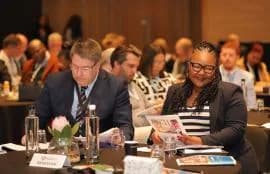
Basic Education Minister Siviwe Gwarube has emphasised the urgent need for collective leadership and robust partnerships between government, universities, and communities to strengthen South Africaâs education system.
Speaking at the Western Cape G20 Provincial Education Indaba, held at the Century City Conference Centre, Gwarube said collaboration was central to transforming education outcomes.
âOur challenge and our opportunity lie in partnerships. For too long, government, universities, and communities have worked alongside each other but not always in full alignment. That must change. We need shared stewardship of the education system, one where accountability is reciprocal and leadership is collective,â she said.
The Indaba, themed âQuality Foundational Learning with emphasis on Early Childhood Developmentâ and âEducational Professional Development for a Changing Worldâ, forms part of South Africaâs G20 Presidency programme. It follows President Cyril Ramaphosaâs call to ensure public participation in shaping the global agenda.
âAs G20 President for 2025, South Africa has pledged to âtake the G20 to the peopleâ. This commitment means aligning global priorities with our peopleâs lived realities. Today, that journey brings us here, to the Western Cape,â Gwarube added.
She praised the provinceâs contribution to the national economy and education sector, highlighting its ability to create 69 000 jobs and maintain the lowest unemployment rate in the country.
The Minister stressed that the Indabaâs purpose was not abstract discussion, but tangible connection between global debates and local classrooms â from early childhood centres in George, to rural schools in the Karoo, and high schools in Cape Town.
Gwarube outlined six focus areas for collaboration:
Policy Alignment and Responsiveness: ensuring teacher training matches evolving priorities like literacy, numeracy, and bilingual education.
Professional Learning Communities: fostering dialogue between subject advisers and academics.
Teacher Supply and Demand Planning: addressing shortages in key subjects and rural schools.
Work-Integrated Learning: placing student teachers in schools with proper mentorship.
Induction and Continuous Development: strengthening teacher preparation and lifelong learning.
Monitoring, Evaluation and Research: combining government data with academic expertise for reforms.
She noted that global best practices, such as Finlandâs high-level teacher qualifications and Singaporeâs government-university collaboration, offered valuable lessons. However, she emphasised that South Africa must design its own model, rooted in local realities.
âThis Indaba must not be remembered for speeches alone, but for the partnerships it builds and the commitments it inspires,â Gwarube said.